
Criminal Cases in the Monroe County Courts
Monroe County criminal cases are divided by jurisdiction. The Magistrate Court hears misdemeanors and handles complaints, arrest and search warrants, bail, and preliminary proceedings in felony cases. The 30th Judicial Circuit Court hears all felonies, certain misdemeanors, and appeals from magistrate or municipal courts. Judge Amy L. Mann serves the circuit shared by Monroe and Summers counties, but Monroe filings remain with the Monroe clerk.
The Monroe County Circuit Clerk describes the local counter where circuit dockets and public documents are kept.
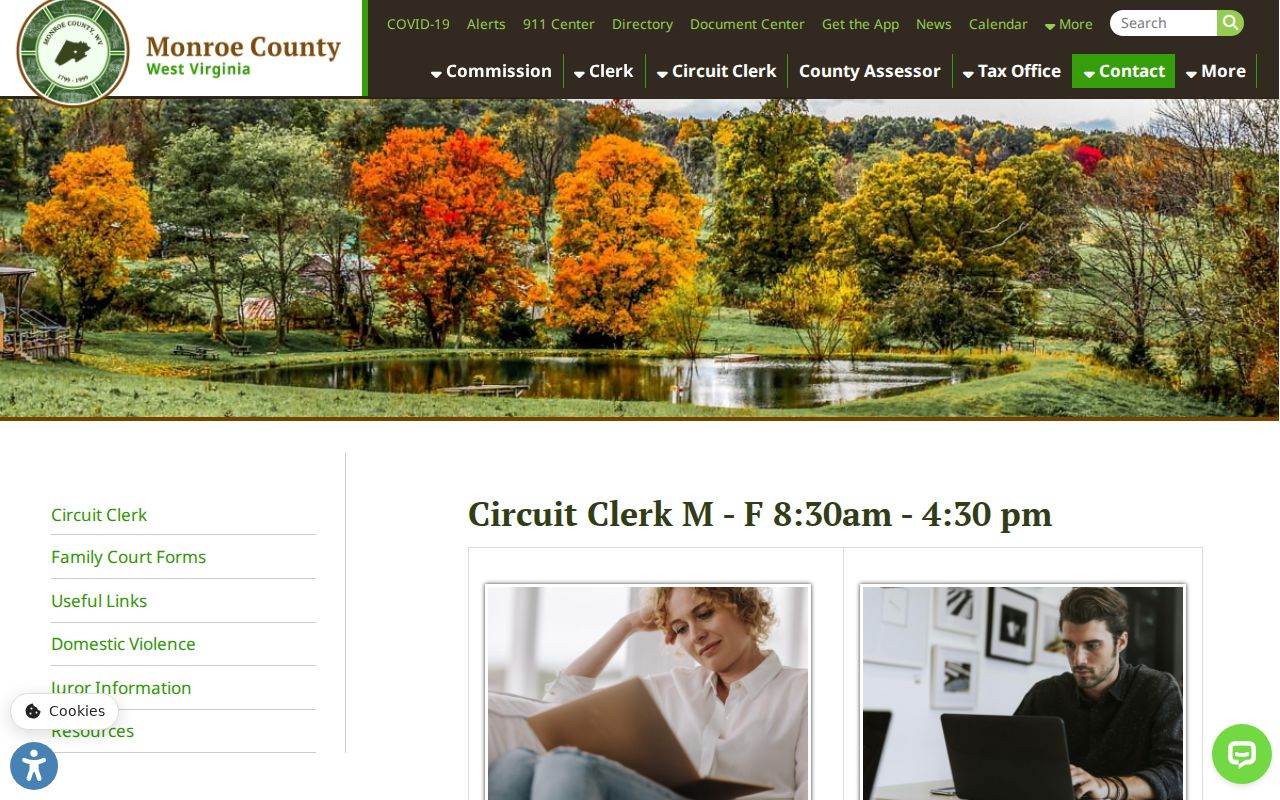
That office is the right destination for a felony indictment, circuit judgment, sentencing order, older file, or certified circuit copy. A town ordinance case may remain with the town court where one is established, so the court named on a citation matters.
Searching Monroe Cases in MCRSearch
The free Magistrate Record Search is the best first index for a Monroe County misdemeanor or felony preliminary case. It searches all 55 counties and returns no more than 30 records. Documents cannot be downloaded from this interface. A common name may fill the result limit, so add a first name, narrow to Monroe County when that filter appears, or use an exact case number.
The search screen helps locate the court and case number, while the filing clerk supplies the actual complaint, public orders, or copies. It is an index, not a statewide fingerprint history and not proof that every older or restricted matter will appear.
How to Search Case Records
Begin with the level that most likely holds the filing, but check both when a felony moved from preliminary work to circuit court. The West Virginia Judiciary Court Record Access page routes readers to magistrate and circuit systems. Registered circuit users may download public documents for a nominal fee. No specific local copy amount is published in the research, so ask the clerk before ordering.
- Open Magistrate Record Search for a misdemeanor, complaint, warrant return, bail entry, or felony preliminary file.
- Enter a first or last name, or use the exact case number when it is known.
- Narrow the result to Monroe County and note the case number, court, type, and status.
- Search Circuit Court Record Access if a felony proceeded to indictment, trial, plea, or sentence.
- Call the correct Monroe County clerk for public documents, certification, older material, or an unclear docket.
| Field Label | Type | Required | Notes |
|---|---|---|---|
| First Name | Text | No | One search criterion is needed; this can narrow a common surname. |
| Last Name | Text | No | Spelling affects matches and partial results can be broad. |
| Case Number | Text | No | Use as the precise alternative to a name search. |
| County | Selector | Unspecified | Use Monroe County to narrow statewide results where offered. |
| Search or Clear | Button | Not applicable | Runs the query or resets entered criteria. |
Monroe Court Counters Compared
The Judiciary's Monroe County directory separates the two local record counters and their staff.
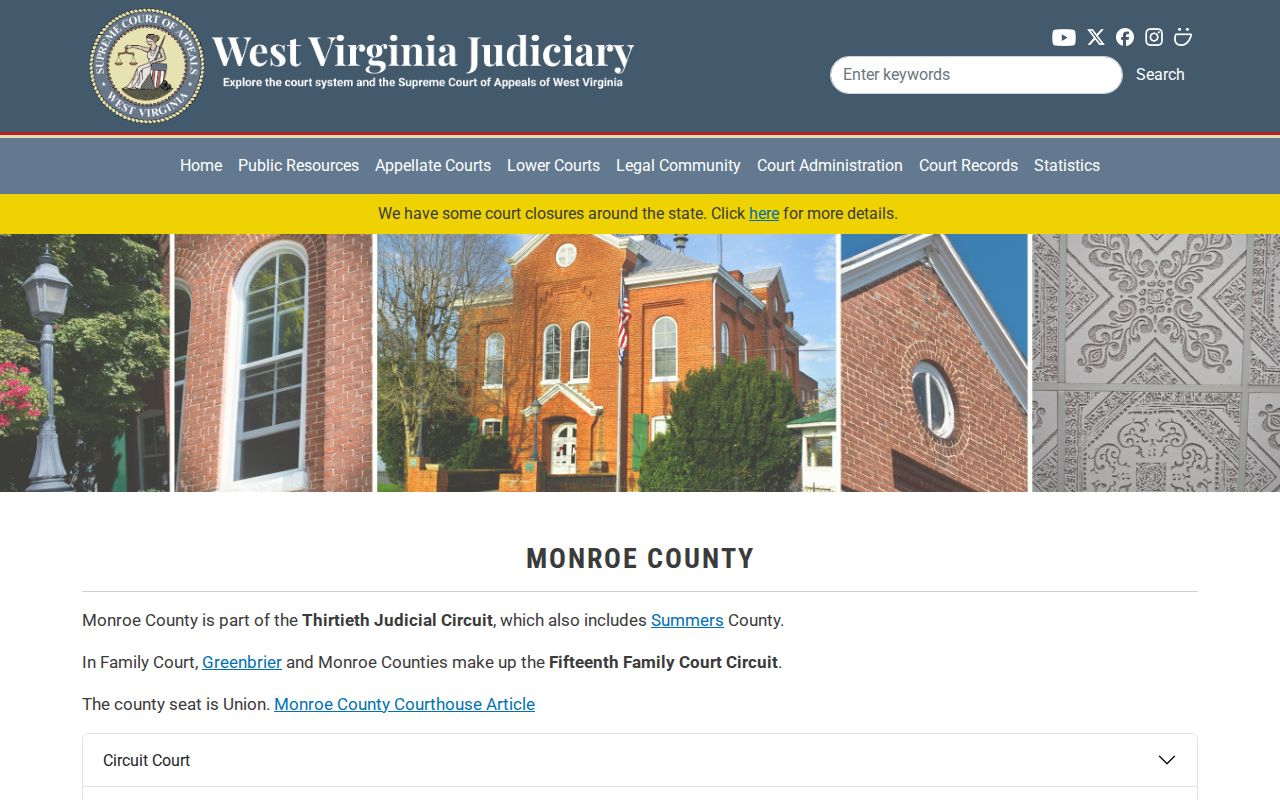
Magistrate Clerk Jeanne Gullette works from P.O. Box 4, 500 Main Street, Union, WV 24983, at 304-772-3321. That counter holds misdemeanor files and felony complaints, affidavits, bail, and preliminary records. Circuit Clerk Daniel Tickle works at the Monroe County Courthouse, P.O. Box 350, Union, WV 24983. The circuit numbers are 304-772-3096 ext. 4 and 304-772-3017, with weekday hours of 8:30 a.m. to 4:30 p.m.
Call ahead when the search does not reveal whether a file is online, archived, or ready for certification. Published sources do not promise parking, public device use, or a dedicated records-room line. The prosecuting attorney handles the case for the state but is not the custodian of the public court file.
Monroe County's two counters sit close together in Union, yet their files are not interchangeable. The magistrate office is at 500 Main Street, while the circuit counter is at the courthouse address of 350 Main Street. A result headed for Magistrate Court should not be requested from the circuit clerk merely because both offices serve the same county. Read the court name and case number first. This small step reduces delays and helps staff locate the exact public file instead of searching by name alone.
What the Case File Shows
A Monroe County criminal court file records what was formally filed and what the judge decided. It can distinguish an officer's first allegation from a prosecutor's later charge, a grand-jury count, a plea, or a final judgment. Read the signed disposition and sentencing order before drawing a conclusion from an early docket entry.
| Case Number & Court | Identifies the filing court, county, and record used for requests. |
|---|---|
| Charging Document | Shows the complaint, indictment, or information and the alleged statutes. |
| Docket Entries | Lists filed motions, orders, hearing events, and other public activity. |
| Hearing Dates | Shows scheduled events and the assigned judge when public. |
| Disposition & Judgment | States dismissal, acquittal, plea, verdict, or other final outcome. |
| Sentence & Conditions | May list confinement, probation, fines, costs, restitution, and supervision terms. |
Attorney names, bond entries, a linked magistrate number, and appeal references may also appear. Social Security numbers, protected victim details, sealed attachments, and unserved-warrant facts are not ordinary public fields.
Following Monroe Felonies Between Courts
A felony may create two connected Monroe County records. The magistrate file begins with the complaint, initial appearance, bail decision, and preliminary hearing or waiver. If the charge proceeds, the circuit file carries the indictment or information, arraignment, motions, plea or trial, judgment, and sentence. Searching only one level can leave half the story out.
The official magistrate search instructions explain the free index and its clerk-copy fallback.
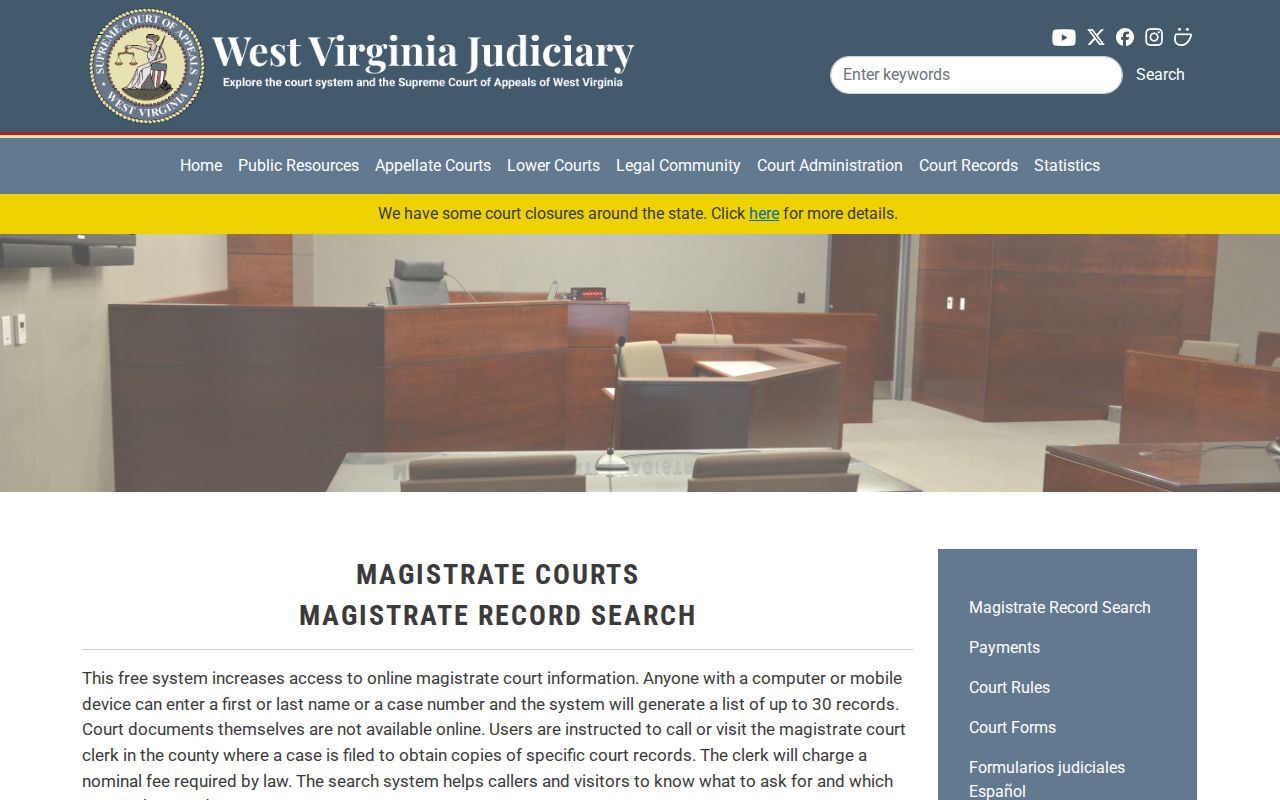
Save the magistrate case number, then check the circuit docket for a linked lower-court number. If no link is clear, give both clerks the party name and approximate filing date. A jail admission may help establish timing, but the court judgment controls the charge and outcome. The broader Monroe County arrest history explains why booking and case records can differ.
Stages of a Criminal Case
Monroe County criminal cases do not all pass through every stage. A misdemeanor can remain in magistrate court. A felony usually starts there before circuit action, while dismissal, waiver, a plea, or another ruling may shorten the path. Docket dates show what actually occurred in a specific file.
Case flow: Charges Filed › Arraignment › Pretrial › Plea or Trial › Disposition › Sentencing
The West Virginia magistrate court overview confirms that magistrates issue warrants, set bail, try misdemeanors, and conduct felony preliminary examinations.
That jurisdiction explains why an early felony search can produce a magistrate result even before any circuit docket is available.
Reading Monroe Criminal Dispositions
The complaint charge is not always the judgment charge. Prosecutors may amend a count, a grand jury may return different counts, a case may be dismissed, or a plea may resolve a narrower offense. On a Monroe County docket, the disposition states how the charge ended. The judgment and sentencing order provide the firmest public account of guilt and sentence.
The Judiciary's public record access page is the official route to statewide court systems.
A docket entry alone may be brief. Ask the clerk for the public order when the result label is unclear. Repository data can also lag behind a signed court result, so a current Monroe County judgment should be compared with any older criminal-history entry.
- Disposition
- The recorded outcome of a charge, such as conviction, dismissal, or acquittal.
- Indictment
- A formal felony charging document returned by a grand jury.
- Arraignment
- The stage when the filed charge is presented and a plea is entered.
- Restitution
- A court-ordered payment tied to loss caused by the offense.
Access & Restrictions
West Virginia law favors access to public records, but a public docket is not an unredacted file. West Virginia FOIA policy supports open government, while court rules and orders govern judicial files. Juvenile matters, expunged or sealed cases, protected victim data, mental-hygiene records, and some domestic-violence material do not follow ordinary access rules.
Sensitive fields can include Social Security numbers, driver-license numbers, account credentials, home street addresses, and details identifying victims, informants, jurors, or witnesses. Unserved warrants may also be withheld when release could harm an investigation or safety. A redacted online view does not prove the clerk possesses nothing more, but the clerk cannot release material barred by law or order.
When Monroe Case Searches Fail
A blank name search does not establish that no Monroe County criminal case exists. Try another spelling, add a first name, or use the case number. Check the circuit system when the magistrate search is empty, especially for a felony. Older records may not be fully indexed, and sealed or expunged matters are intentionally unavailable.
For a town ordinance matter, inspect the citation or caption before assuming it belongs in either county system. Municipal courts, where established, keep their own ordinance dockets. State-law misdemeanors and felony preliminary work belong in Monroe Magistrate Court. That distinction matters most when a town event produces both a local citation and a separate state-law case.
The county Circuit Clerk page provides the local fallback and office context. If the case number is known, give it to the clerk first. Otherwise provide the name and an approximate year without asking staff to create a custom research product. For a magistrate file, call 304-772-3321. For a circuit filing, call 304-772-3096 ext. 4 or 304-772-3017. Ask which public copies exist, what certification is available, and what cost applies before placing an order.